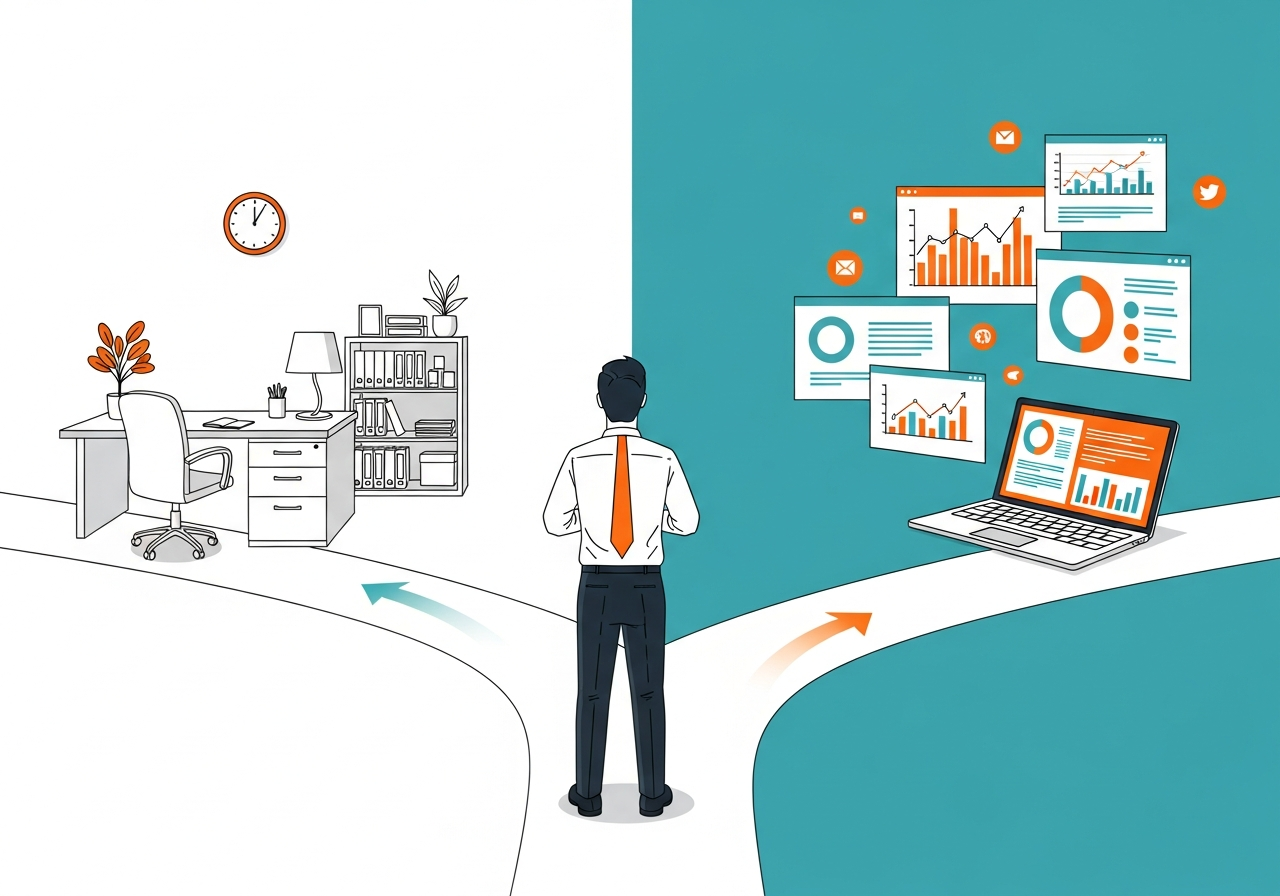
Can Working Professionals Learn Digital Marketing While Working Full-Time?
Yes, you can! Discover practical strategies for working professionals to learn digital marketing without quitting their job. Time management tips, study schedules, and success stories inside.

"I want to learn digital marketing, but I can't quit my job." If this sounds like you, you're in the right place. The answer to whether you can learn digital marketing while working full-time is a definitive yes – thousands of professionals do it every month.
The real question isn't whether it's possible, but how to do it effectively without burning out. This guide gives you practical strategies, realistic schedules, and proven tips to successfully learn digital marketing while keeping your day job.
Table of Contents
The Reality of Learning While Working
Let's be honest about what you're signing up for:
What It Takes
- Time commitment: 10-15 hours per week for 4-6 months
- Sacrifice: Less TV, social media scrolling, and leisure time
- Consistency: Regular study habits matter more than marathon sessions
- Energy management: Learning when you're mentally fresh
What You Get
- New career opportunities without income gap
- Financial security while transitioning
- Ability to test interest before committing fully
- Practical application of learning in real time
The Timeline
Realistically, learning while working takes longer than full-time study:
- Basic proficiency: 3-4 months
- Job-ready skills: 5-6 months
- Confident practitioner: 8-12 months
This is still a relatively short time for a complete career transformation.
Finding Time: A Practical Audit
Before creating a study schedule, understand where your time currently goes:
Track Your Week
For one week, log how you spend every hour. You'll likely find:
- 2-3 hours daily on social media/streaming
- 1-2 hours of commute time (often wasted)
- 30-60 minutes of "waiting" time daily
- Weekend hours with no real purpose
Hidden Time Pockets
Time you didn't know you had:
- Morning (6-8 AM): Before work hours – freshest mind
- Commute: 1-2 hours daily for audio/video learning
- Lunch break: 30-45 minutes of potential study time
- Evening (8-10 PM): After dinner study sessions
- Weekends: 4-6 hours on Saturday and Sunday each
Time Math
Let's calculate available hours:
- 1 hour before work × 5 days = 5 hours
- 30 min during lunch × 5 days = 2.5 hours
- 1 hour evening × 3 days = 3 hours
- Weekend study = 6-8 hours
- Total: 16-18 hours per week available
You only need 10-15 hours. It's absolutely doable.
Proven Study Schedules
Choose a schedule that fits your lifestyle:
Schedule A: Early Bird (Best for focused learning)
- Monday-Friday: 5:30 AM - 7:00 AM (1.5 hours)
- Saturday: 8:00 AM - 12:00 PM (4 hours)
- Sunday: 9:00 AM - 12:00 PM (3 hours)
- Weekly total: 14.5 hours
Schedule B: Night Owl (For evening productivity)
- Monday-Thursday: 8:30 PM - 10:30 PM (2 hours)
- Friday: Rest day
- Saturday: 10:00 AM - 2:00 PM (4 hours)
- Sunday: 6:00 PM - 9:00 PM (3 hours)
- Weekly total: 15 hours
Schedule C: Weekend Warrior (Heavy weekend focus)
- Monday-Friday: 30 min during lunch + 30 min commute (1 hour)
- Saturday: 9:00 AM - 2:00 PM (5 hours)
- Sunday: 9:00 AM - 2:00 PM (5 hours)
- Weekly total: 15 hours
Schedule Tips
- Keep at least one full rest day per week
- Front-load harder topics when energy is high
- Use smaller time blocks for review, longer blocks for new learning
- Be flexible – life happens, adjust as needed
Effective Learning Strategies
Maximize the impact of your limited study time:
Active Learning
Don't just watch videos passively:
- Take notes while learning
- Pause and practice what you just learned
- Create summaries of each module
- Teach concepts to someone else (or pretend to)
Immediate Application
Apply learning the same day:
- Learned about Facebook ads? Create a practice campaign
- Studied SEO? Optimize a blog post immediately
- Covered analytics? Set up tracking on a personal project
Spaced Repetition
Review previous learning regularly:
- Quick review of yesterday's learning before starting new topics
- Weekly review sessions on weekends
- Monthly consolidation of all topics
Learning Format Mixing
Use different formats for different situations:
- Video courses: For focused study sessions
- Podcasts: During commute
- Articles/blogs: During lunch breaks
- Practice exercises: For weekend deep work
The 80/20 Rule
Focus on high-impact skills first:
- 20% of digital marketing skills produce 80% of results
- Master fundamentals before advanced tactics
- Focus on one area at a time instead of spreading thin
Avoiding Burnout
Sustainable learning beats intensive burnout every time:
Signs of Approaching Burnout
- Dreading study sessions
- Unable to focus or retain information
- Feeling overwhelmed and behind
- Work performance suffering
- Sleep and health issues
Prevention Strategies
- Take breaks: One full day off from learning per week minimum
- Vary activities: Mix learning with practice with projects
- Celebrate wins: Acknowledge progress, however small
- Connect with others: Join learning communities for support
- Remember why: Keep your career goals visible
When to Take a Break
It's okay to pause if:
- Work has temporarily intense period
- Family needs require attention
- You're feeling mentally exhausted
- Health requires it
A week-long break won't derail your progress. Burnout will.
Success Factors
What separates those who succeed from those who quit:
1. Clear Goals
Define exactly what you're working toward:
- "I want to be job-ready in digital marketing in 6 months"
- "I want to freelance on weekends within 4 months"
- "I want to transition internally within 8 months"
2. Accountability
Create systems that keep you on track:
- Share goals with family or friends
- Find an accountability partner or study buddy
- Join a course with deadlines and cohorts
- Track progress visually
3. Environment Design
Set up your environment for success:
- Dedicated study space at home
- Apps blocked during study time
- Materials ready before each session
- Family aware of your schedule
4. Flexibility
Adapt without abandoning:
- Missed a session? Reschedule, don't skip
- Life got busy? Reduce intensity, don't stop
- Something not working? Try a different approach
5. Progress Tracking
What gets measured gets managed:
- Weekly hours studied
- Modules/topics completed
- Practical projects done
- Skills acquired and practiced
Frequently Asked Questions
Q1: Is 1-2 hours daily enough to learn digital marketing?
Yes, absolutely. Consistency beats intensity. 1-2 hours of focused daily learning is more effective than sporadic 8-hour sessions. Most successful career changers learned with similar time commitments.
Q2: What if my job is too demanding to study?
Start with smaller commitments – even 30 minutes daily during lunch. Progress will be slower but still happens. You can increase study time when work pressure reduces. Some learning is better than no learning.
Q3: How do I stay motivated for months?
Connect with your "why" regularly. Set milestone rewards. Join learning communities. Track visible progress. Remember that each hour of study brings you closer to a new career.
Q4: Should I tell my employer I'm learning digital marketing?
It depends on your relationship and company culture. Some employers support development, others might see it as a flight risk. Generally, wait until you've decided on your next move before discussing.
Q5: Can I learn faster if I take leave from work?
You could, but it's risky. The stress of no income often reduces learning effectiveness. It's usually better to learn steadily while employed. Only consider leave if you have significant savings and a clear plan.
Conclusion
Yes, you absolutely can learn digital marketing while working full-time. Thousands have done it before you, and you can do it too.
The key is realistic expectations, consistent effort, and smart strategies. You're not trying to become an expert overnight – you're building a new career brick by brick, hour by hour.
Your current job gives you financial security while you build new skills. Use this advantage. There's no need to take risky leaps when you can make a calculated, well-prepared transition.
Start this week. Even if you only have 30 minutes today, use them. Your future digital marketing career starts with that first session.
Upgrade Your Career with LearnYogi
LearnYogi's program is designed for working professionals with flexible schedules, weekend batches, and self-paced options.
- ✓ 69+ Digital Marketing Modules
- ✓ AI Tools and Automation Training
- ✓ Live Practical Projects
- ✓ Industry Expert Trainers
- ✓ Recognized Certification
- ✓ Placement Assistance